The plan that landed in my lap
Abstract
How the Brazilian Artificial Intelligence Plan came about: from the challenge President Lula put to the National Council for Science and Technology in March 2024, to the delivery of the plan four months later, and what came next.
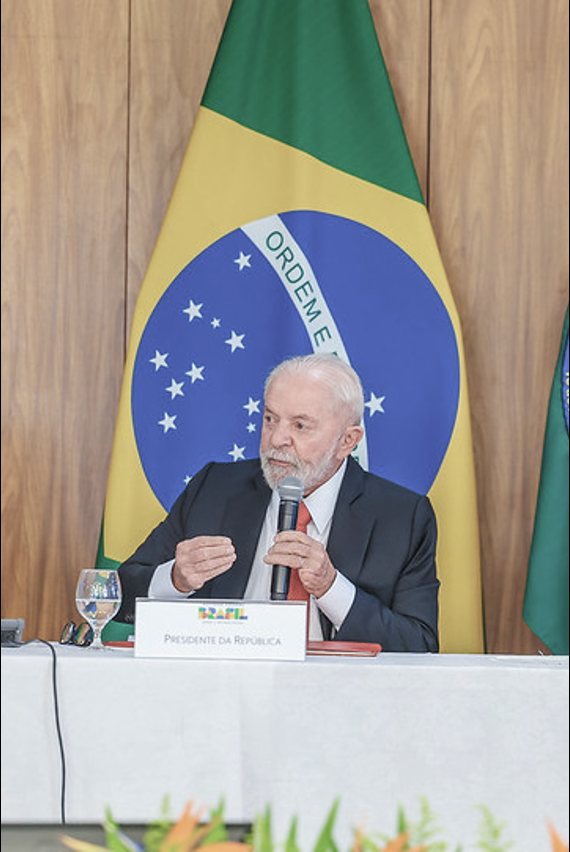
I arrived in Brasília on 8 March 2024. The date has stayed with me for three reasons. It marked a new stage in my family’s life and in mine. It was International Women’s Day. And it was the day after the second ordinary meeting of the National Council for Science and Technology (CCT), which President Lula reactivated in his third term and which met to discuss artificial intelligence. Brazilian researchers such as Virgílio Almeida and Laura Schertel Mendes gave keynote lectures on the opportunities and challenges of AI for Brazil, in the President’s presence. It was there that Lula set the members of the CCT a challenge: to present a proposal for an AI policy for the country.
…to define a concrete artificial intelligence policy for this country. And it is you [the CCT] who have to present it. You have to start putting on paper what we want to do. […] If you have the intelligence to make the proposal, I will have the courage for us to create a Brazilian artificial intelligence policy.
… an Artificial Intelligence for good, and not an Artificial Intelligence for evil. An Artificial Intelligence to help care for health, to help care for the poor, to improve the decarbonisation of planet Earth, and not an Artificial Intelligence to tell fake news every single day to the ears and eyes of billions and billions of human beings.
Luiz Inácio Lula da Silva, speaking to the CCT (7 March 2024) and at the launch of the submarine Tonelero (Itaguaí, 27 March 2024). My translation.
A plan in four months
Created in 1996, the CCT is the highest advisory body to the Presidency on science and technology policy. It is chaired by the President of the Republic; the Ministry of Science, Technology and Innovation (MCTI) acts as its executive secretariat, and the Centre for Strategic Studies and Management (CGEE) advises the secretariat. “Since Caetano is arriving, put him in charge of this request”, someone was overheard saying in Brasília, in a conversation between MCTI and CGEE. And so, following the trickle-down effect, the drafting of the Brazilian Artificial Intelligence Plan (PBIA) landed in my lap.
CGEE had an advantage. As an organisation serving the state but outside the direct administration, it is a repository of capacities and competences on critical science and technology topics. It was also already evaluating and revising the Brazilian Artificial Intelligence Strategy (EBIA), launched in 2021. The deadline, however, was two months at most (!), because the government wanted to present the plan at the 5th National Conference on Science, Technology and Innovation, scheduled for May. The climate disaster of the floods in Rio Grande do Sul pushed the Conference back to July, which gave us two more months of work.
We combined bottom-up with top-down work. We held six workshops with different groups: academia, civil society, industry, government, public IT institutions and oversight bodies. In each, we heard that group’s vision of AI and what it needed. A set of axes guided the discussions. There were three at first (infrastructure and R&D, AI in industry, training), then four with support for AI governance and regulation, and finally five with AI for better public services.
We received hundreds of proposals and contributions from the institutions represented on the CCT and organised them in a spreadsheet showing what would be covered and how. From these inputs we narrowed the proposals down, grouped those that remained into programmes and began bilateral meetings with the potential “owners” of each action. The cut-off rule was clear: an action entered the plan if it had a credible budget and could feasibly be delivered. In parallel, CGEE deepened the diagnosis, in an iterative process, to establish where we stood and where we intended to be in three and in five years, with targets and monitoring indicators. In all, 117 institutions and around 300 people took part.
AI for the Good of All
The result was the PBIA, subtitled “AI for the Good of All”. At some meeting I suggested the name BrasilIA, which went nowhere. The plan proposes 54 structuring actions, with planned investment of R$ 23 billion between 2024 and 2028, spread across five axes. It also includes 31 immediate-impact actions, which apply AI algorithms to deliver short- and medium-term results, improve people’s lives and demonstrate what the technology can do.
We also proposed a Brazilian vision for AI, which answers the President’s request of March almost point by point. AI for the Good of All is, first of all, human-centred and accessible to all: it respects dignity, social rights and cultural, regional and ethnic diversity, values work and workers, and prevents inequality and discriminatory bias. It is directed at overcoming social, environmental and economic challenges, increasing well-being and contributing to the Sustainable Development Goals. It rests on the right to development and on national sovereignty, and promotes technological autonomy and economic competitiveness. It is transparent, traceable and accountable, and guarantees privacy and data sovereignty, cybersecurity, consumer protection and intellectual property. And it is globally cooperative, on fair and mutually beneficial terms, in the service of human progress, the integrity of information and the defence of democracy.
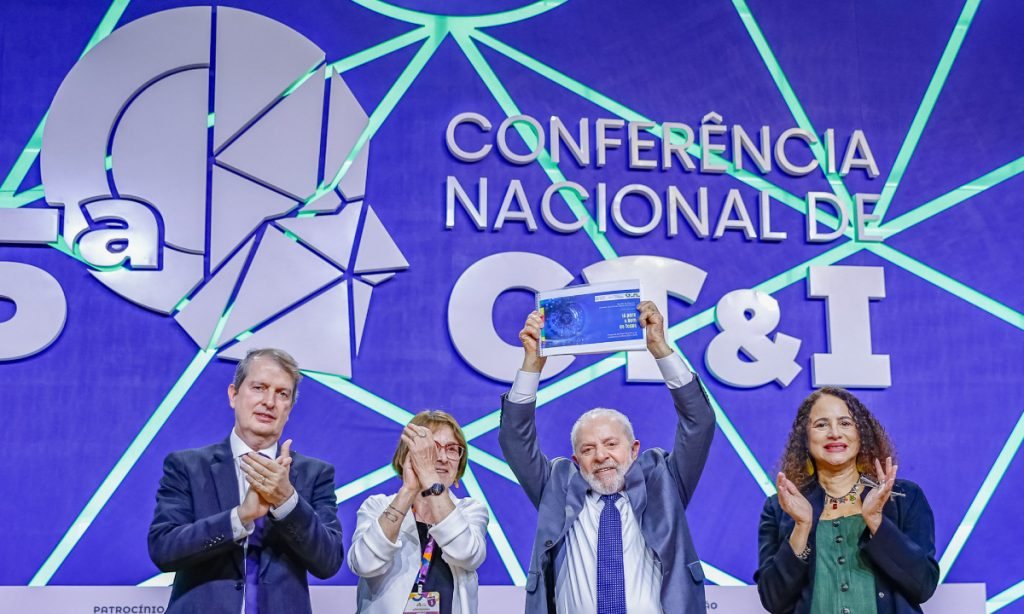
The PBIA was officially announced on 31 July 2024, at the opening of the 5th Conference in Brasília, when it was handed to President Lula.1 Formally, it was a proposal from the CCT to the Presidency. In practice, it came from the dedicated work of a core group of people within the working group set up to lead the drafting of the plan. I know well who worked through the night before the announcement, who spent the last weekend negotiating so that the plan would not die before the starting line, who the plan’s ghostwriters were, myself among them. But that is for another occasion.
Brazil’s AI ecosystem received the PBIA very well, from NGOs and academia to big tech firms, which approached us to contribute. An analyst who took part directly in drafting the Marco Civil da Internet, Brazil’s internet bill of rights, put it this way: “I want to live on the PBIA’s planet, not on that of the AI regulation bill” (PL 2.338/2023).
Three horizons for sovereignty
The PBIA is being rolled out, perhaps more slowly than it should and could be. But it is moving forward and being implemented, which cannot be said of the many plans that ended up shelved; CGEE monitors its execution at pbia.cgee.org.br. Among its advances is the (re)definition of three technological routes to secure Brazilian sovereignty in AI, understood as the power to decide and to bargain.2
The first route answers an immediate horizon, up to two years, in which acquiring high-performance computing capacity is the priority, because waiting has a cost: the race for large-scale AI models does not tolerate delays of that order of magnitude. Here the country operates the dominant architecture with discipline. In the plan this is Action 1, a new supercomputer dedicated to AI, which President Lula set out on 20 August 2026 in Macaíba (Rio Grande do Norte) as part of a R$ 2.5 billion package.3 The machine, with around 7,200 petaflops and an investment of just over R$ 1 billion, will sit in the Augusto Severo Science and Technology Park and will be run by the National Laboratory for Scientific Computing (LNCC). The procurement notice requires offsets in technology transfer, research and development, local content and Brazilian suppliers, as well as the training of 5,000 Brazilians over five years.
The second route corresponds to a medium horizon, two to five years, in which the diffusion of the acquired technologies has to become effective industrial capacity and trained people, with diversified suppliers and open standards in the integration layer. The risk of capture by external interests is permanent if the transfer is not conducted with clarity about what is to be absorbed. When I wrote the chapter, the initiative for this horizon was under confidential negotiation with Huawei, which we supported from CGEE, and so it was left out of the text. It became public in August, with the unfolding of Action 1: a five-year, R$ 1.28 billion partnership between the National Education and Research Network (RNP) and the Chinese companies Huawei and iFlytek. The supercomputing infrastructure, in Rio de Janeiro, is due to start operating in July 2027 and is aimed at models in Portuguese, a sovereign software stack, technology transfer and the training of 3,000 professionals. Added to it is the Brazilian cloud, the subject of an agreement between the Ministry of Management (MGI), ABDI, Serpro and BNDES.
The third route answers a long horizon, five years and beyond, in which taking part in open hardware architectures such as RISC-V and the international co-development of accelerators become plausible paths to partial autonomy. In the plan this is the front of international partnerships to develop supercomputer nodes and accelerators (Action 5). The August package gave it a first concrete step: chips on the open RISC-V architecture, developed by Instituto Eldorado in Campinas in cooperation with the Barcelona innovation ecosystem, with R$ 125 million from the government, as much again expected from the private sector, and a horizon of 10 to 15 years.
Policy has to operate on all three horizons at once, with different instruments for each. Postponing the decision on open hardware architectures amounts, in practice, to deciding against that possibility, because lock-in forms before the alternative matures. That is why the immediate purchase has to be structured from the outset to preserve fungibility and plant architectural differentiation, even when one family of accelerators carries most of the initial load. It is this diversification, planted now, that produces in the medium term the trained people and the bargaining capacity that international partnerships can then leverage in the long term. With the August package, the plan now has initiatives on all three horizons.
I have presented the plan and its progress on several occasions: at a public hearing of the Senate Committee on Science and Technology in October 2025; at the International Symposium on Immunobiologicals at Bio-Manguinhos and at the EU–Brazil Business Dialogue on industrial AI in May 2026; and at the RNP Forum in August 2026 (see talks). The Bio-Manguinhos talk reads the plan through the lens of capacities and capabilities and is summarised in this note, with the slides.
Why I am writing this now
I am writing this now, after the run-off, for two reasons. The first is what was at stake in the election. The three routes assume that Brazil keeps the freedom to choose its technology partners and to diversify its dependencies. The other candidacy that reached the run-off held out automatic alignment with Donald Trump’s United States. In a world where Washington relaunches the Monroe Doctrine as a “Trump Corollary” and, in the words of Minister Luciana Santos, threatens “to cut off supply to anyone who does business with China in these most critical areas”,4 automatic alignment would have closed the medium-horizon route just as it begins to leave the drawing board, and with it part of the learning on which the long horizon depends. In an article in CEBRI-Revista I described the choice this world imposes on crustacean nations: align with Washington or hedge. The PBIA bets on hedging, that is, on diversifying dependencies, and that bet was on the ballot.
The second reason is institutional. During the electoral period, a text like this, signed by a CGEE director and about a federal government programme, had to wait. CGEE is an institution of the state: we advise everything and everyone, governments of any persuasion. At times, however, the requests put to us are timid and do not raise Brazil’s sovereignty in science and technology. The PBIA was a request equal to that ambition. The views expressed here are my own and do not necessarily reflect those of CGEE or of the Ministry of Science, Technology and Innovation.
-
See CartaCapital, “Lula recebe de cientistas o primeiro Plano Brasileiro de Inteligência Artificial” (in Portuguese). ↩︎
-
I develop the argument in Penna, C. C. R., “Diplomacia da inovação no mundo crustáceo: revoluções tecnológicas e soberania digital brasileira”, in E. V. Garcia and I. F. A. Germano (eds), Diplomacia da inovação: soberania digital e política externa brasileira (Brasília: FUNAG, 2026; in Portuguese). ↩︎
-
Agência Brasil, “Brazil to get its own AI supercomputer”, 21 August 2026; Olhar Digital, “Brasil anuncia pacote de R$ 2,5 bilhões para IA e supercomputador no RN”, 20 August 2026 (in Portuguese); report in Folha de S.Paulo, August 2026 (in Portuguese). ↩︎
-
Interview with Folha de S.Paulo, quoted by Olhar Digital (note 3). My translation. ↩︎